Installation
Importing an Induction Furnace from China: A Practical Checklist
Voltage, transformers, foundations, packing, documents and commissioning — the questions to settle before you place the order, not after the containers arrive.
ForgeLink Export Team9 min read
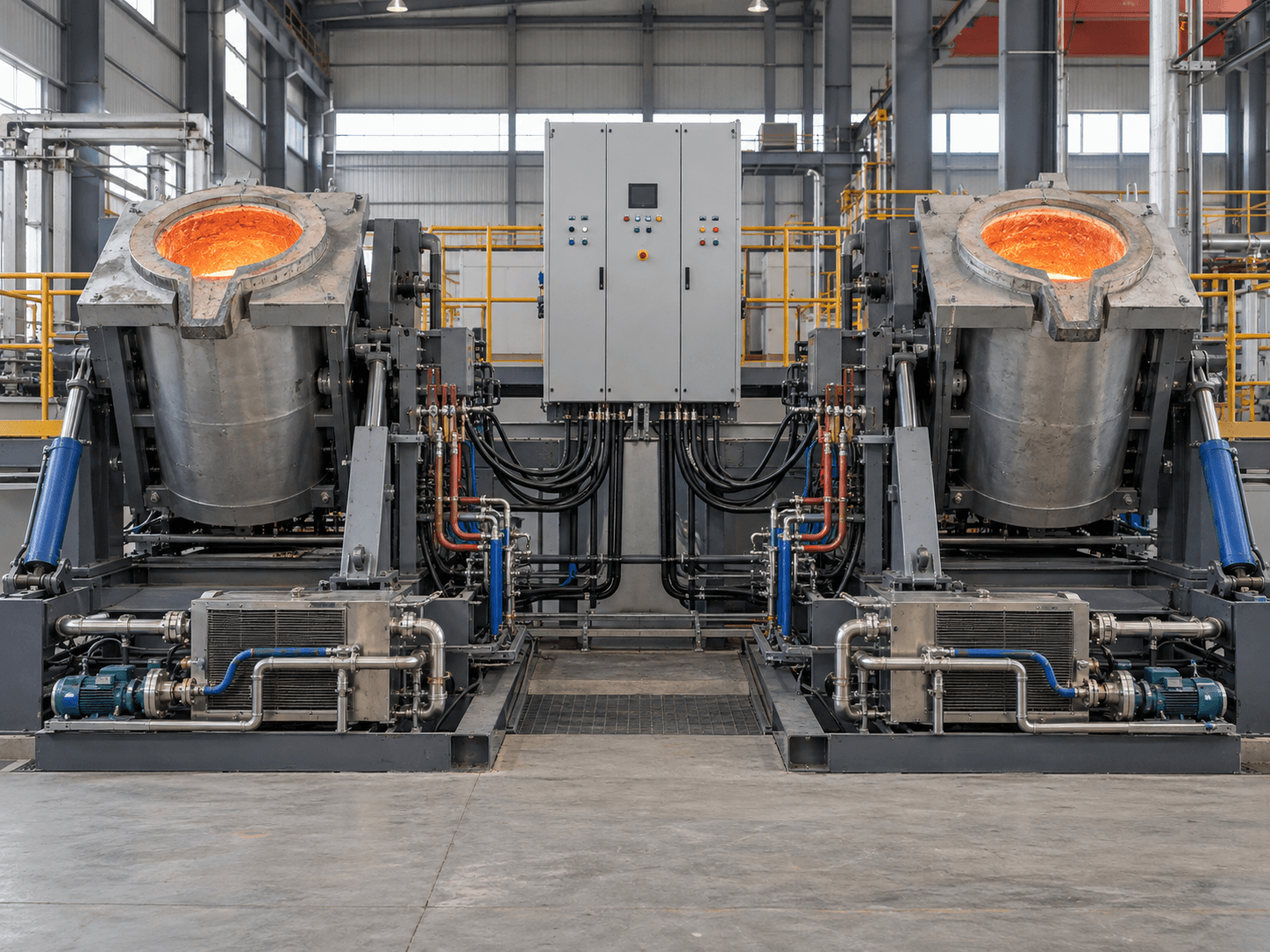
Most problems with imported industrial equipment are not manufacturing problems. They are specification and preparation problems that surface when the containers are already at the port and the answers are expensive.
This checklist covers what to settle before signing, drawn from the questions that actually cause trouble on overseas installations.
Before you request a quotation
Get these six answers on paper. Any supplier quoting without them is guessing, and the price will change later.
- Alloy and tapping temperature, or the part and target temperature for a heating line
- Required output per hour and working hours per day
- Grid voltage and frequency, and available transformer capacity
- Floor area, ceiling height and crane capacity
- Destination port and preferred Incoterm
- Whether local certification (CE, or a national approval) is required
Electrical supply — settle it at order, not on site
The rectifier is built for a specific input voltage and frequency. A unit built for 380 V/50 Hz will not simply run on 480 V/60 Hz, and adapting it on site with a transformer is an expensive, avoidable improvisation. State your grid details in the first enquiry.
Ask for the transformer and cable schedule with the quotation, not after the order. You need it to brief your electrical contractor, and the incoming supply is often the longest item on the critical path — longer, frequently, than manufacturing the furnace.
Civil works run in parallel, if you have the drawings
Foundation drawings with loads, bolt positions and pit dimensions should be issued immediately after order so your civil work runs alongside manufacturing. If drawings only arrive with the equipment, you add weeks of concrete curing to your schedule while containers accumulate demurrage.
Also confirm cooling water: source, quality, and where the tower will stand. Water is the most commonly under-planned utility on an induction installation, and a cooling system that cannot reject the heat will limit the furnace forever.
Inspection and packing
Ask whether the complete system is assembled and run on load before shipment, and ask to witness it or to appoint a third-party inspector such as SGS or BV. Equipment that has never been assembled as a system before shipping is being commissioned for the first time on your floor, at your cost.
For packing, confirm ISPM 15 compliant fumigated timber — non-compliant crating is refused at many ports — plus moisture barriers and desiccant on the electrical cabinets, and a container loading plan showing what is in which container. Get the plan before shipment so your unloading sequence matches your installation sequence.
Documents you will need at customs
Missing or inconsistent paperwork holds containers at the port far more often than any technical problem. Confirm the full set in the contract.
- Commercial invoice and packing list, consistent with each other in every detail
- Bill of lading
- Certificate of origin (CCPIT or China Chamber of Commerce)
- Insurance certificate, where the Incoterm requires it
- Fumigation and heat-treatment certificates for the timber packing
- Any pre-shipment inspection certificate your country requires
Commissioning and training — agree the scope in writing
Confirm how many engineers travel, for how many days, and precisely what is included: installation supervision, first lining installation and sintering, commissioning on your own charge material, and operator and maintenance training. Also confirm who pays for visas, flights, accommodation and daily allowance, and what happens if site preparation delays their work.
Get the English operating and maintenance manual before the engineers leave, and make sure your maintenance team — not only the operators — attends the training. The people who will diagnose a fault at two in the morning are the ones who need to be in the room.